
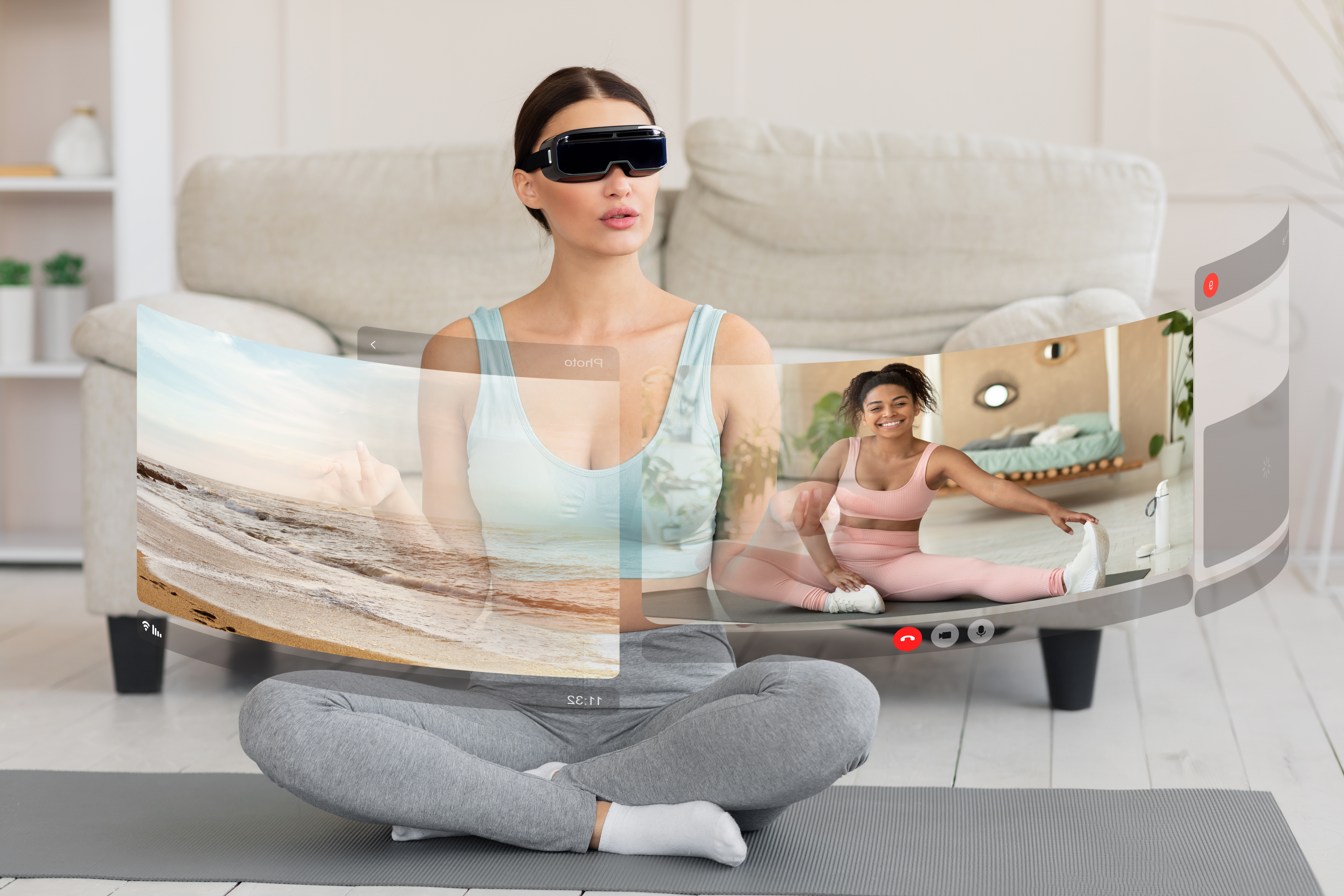
Dr. Tanju Yılmazer, Medical Director of the Home Health Unit at Private Izmir Gazi Hospital, Family Medicine Specialist, and Elderly Health and Care Doctor, spoke about "Virtual Reality" applications, a developing technology that can be used during home care services, while providing information about these services.
Can you talk about the services provided in home care?
Within the scope of home care services, follow-up and treatment of chronic and acute diseases offered in the environment preferred by patients, management of problems encountered in terminal stages of diseases like cancer, respiratory support, pain control, nutrition support, psychological support, some medication applications, and physiotherapy services are included. In a sense, home care can also be called a "home hospital" or "home medical care.""
How does technology contribute during home care?
In parallel with the increase in the elderly population, the incidence of chronic diseases has also increased, and accordingly, the scope of home care services has expanded. In this process, the need for the support of technology has grown, making the development of innovative technologies mandatory. One of these technologies is virtual reality (VR) applications.
What kind of technological application is virtual reality?
Virtual reality is a rising trend among increasingly digitalizing health applications. This technology enables simultaneous stimulation of the senses through special equipment such as head-mounted displays and haptic gloves to create an illusion of reality. Within a computer-generated, usually three-dimensional environment, it allows the person to interact with the image. Thus, the individual feels as if they are having a real experience in a virtual environment; in a sense, reality and imagination merge with the help of technology.
How is virtual reality used in home care?
Virtual reality technologies can be used in the diagnosis of diseases, the education of healthcare workers and patients, the rehabilitation of patients, and exercise programs. Additionally, it can be effective in medical imaging processes, treatment of neurological diseases such as epilepsy, Parkinson's, and vertigo, and in reducing negative emotions such as anxiety, fear, and apprehension associated with head and tooth pain. It is known that virtual reality-based treatments applied to increase patients' quality of life, balance their mental harmony and vital signs, and develop their muscle strength and motor skills give more successful results when used together with traditional methods.