
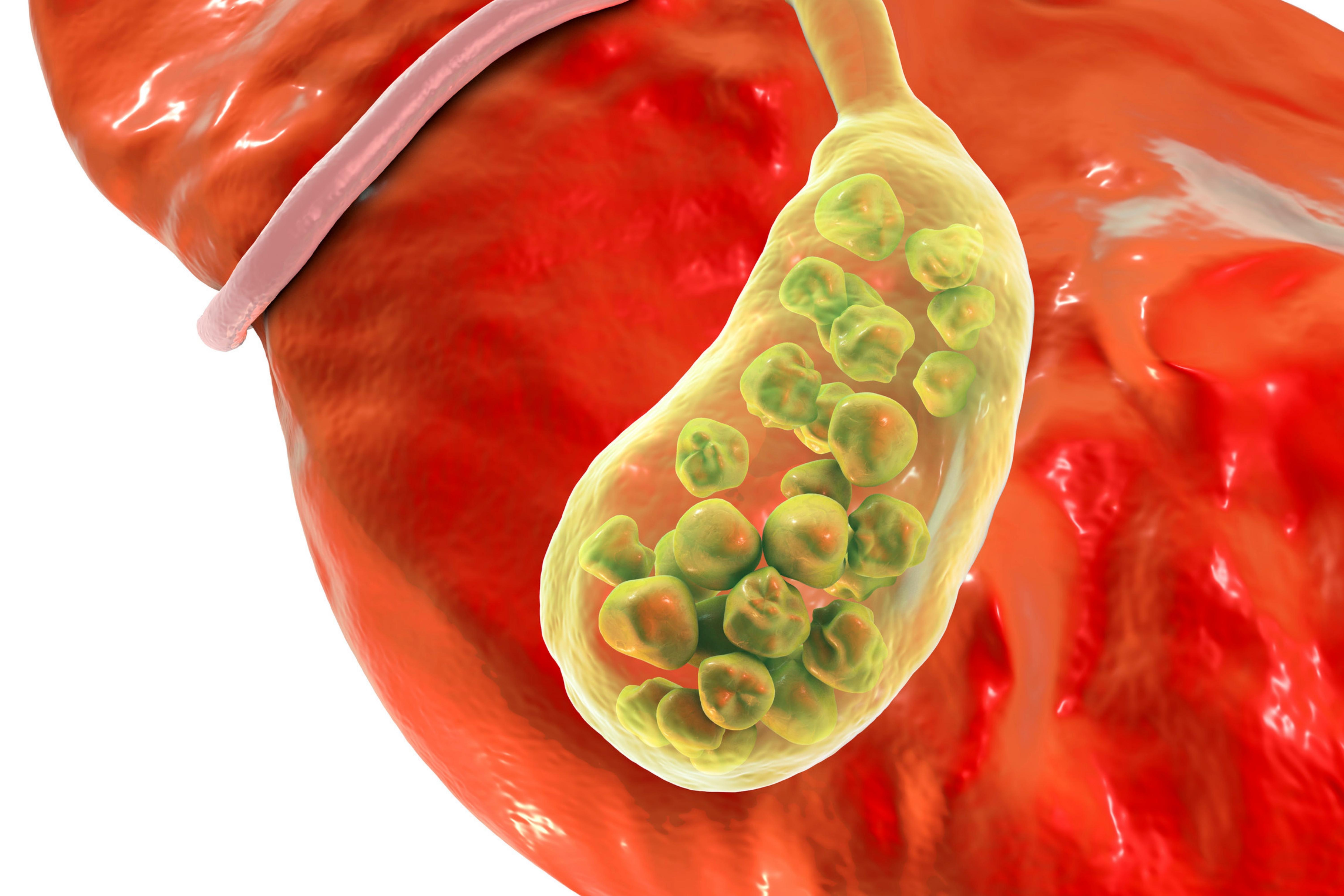
General Surgery Specialist Dr. Emran Kuzey Avcı at Izmir Private Gazi Hospital stated that hardened bile fluid deposits formed in the gallbladder are called gallstones, and said, "The gallbladder is a pear-shaped structure located on the right side of the abdomen, just below the liver. Bile is a fluid produced in the liver and stored in the gallbladder. The task of the gallbladder is to collect and concentrate bile fluid in case of hunger. After meals, food can be easily digested with intensive bile secretion.""
Gallstone Sizes
Pointing out that gallstones can range from the size of a grain of sand to the size of an egg, Dr. Emran Kuzey Avcı said, "While a single stone is seen in some patients, many stones of different sizes can be seen in others. Instead of staying in the gallbladder, these stones can shift towards the bile ducts in line with contractions. In such cases, health problems such as inflammation of the gallbladder (cholecystitis), inflammation of the bile ducts (cholangitis), obstruction in the bile ducts (choledocholithiasis) or inflammation of the pancreas (pancreatitis) can occur.""
Gallstone Symptoms
Expressing that gallbladder stones often do not give any symptoms, Dr. Avcı said, "However, symptoms such as sudden and rapidly intensifying pain in the upper right part of your abdomen, in the middle of your abdomen, just below your breastbone, back pain between the shoulder blades and in your right shoulder, nausea or vomiting, bloating, indigestion or discomfort in your abdomen can be associated with gallstones. Patients who have symptoms due to gallstones usually need to have their gallbladders removed. Similarly, for gallstones that do not have any signs or symptoms, surgery is mostly not required.""
Treatment Process
Stating that patients with symptomatic gallbladder stones are generally operated with the laparoscopic method, which is a closed method of gallbladder surgery, Dr. Emran Kuzey Avcı said, "This process standardly involves the removal of the gallbladder by entering the abdomen with 4 or 3 incisions using a set of special tools. This method is quite safe and patients can be discharged after a 1-day hospital stay and continue their lives where they left off. Advanced technology and techniques are used in our hospital and the number of holes can be reduced to 1 in selected patients. After the surgery, we recommend a short-term diet to our patients. However, it should not be forgotten that not every patient with gallbladder stones has to have surgery.""